

Kimchi is a flavour bomb that livens up many dishes. A spoonful in a burger or on the side of a bowl of rice, lifts the taste buds. Once you start making it you'll crave kimchi and even start using the Kimchi paste on its own in your cooking.
Making Kimchi at home is super easy. The ingredients are not hard to source, and the fermentation is faster than sauerkraut. Homemade kimchi is packed with probiotics, making it an excellent choice for gut health.
How do you make Kimchi from scratch?
- Source fresh vegetables. Check out your local farmers market for Napa Cabbage (also known as Baechu, Wombok, or Chinese Cabbage) and Daikon radish.
- Make Kimchi paste. Gochugaru chili flakes can be found at any Asian food store. All other ingredients are store cupboard staples.
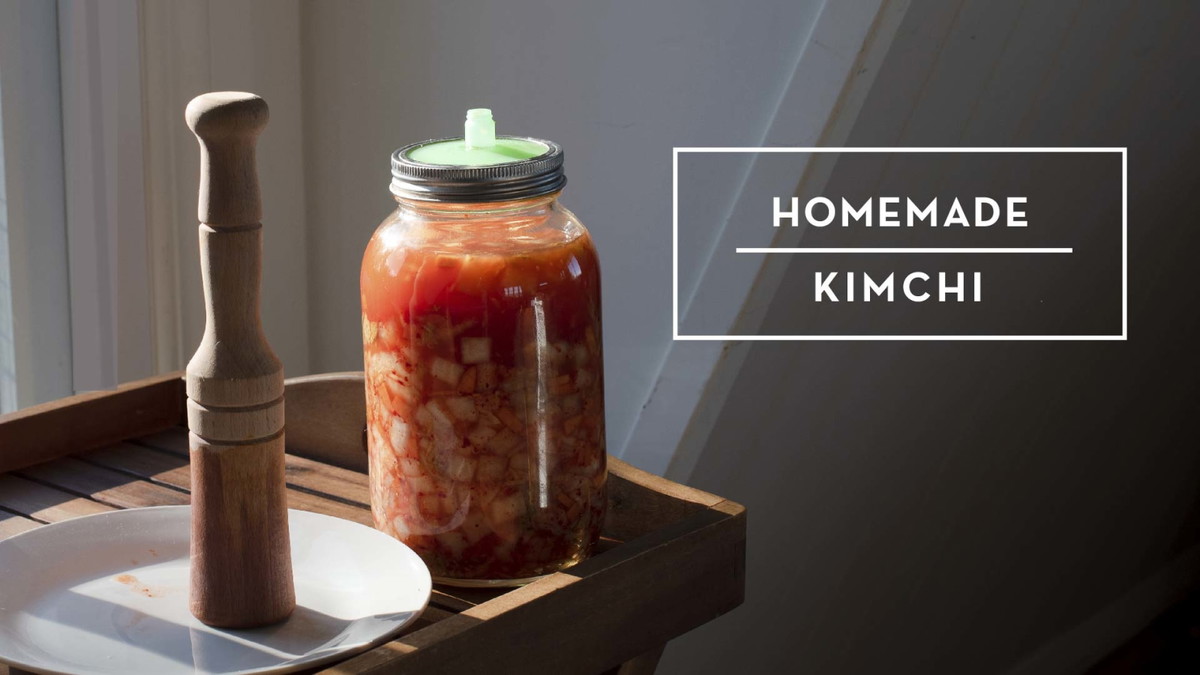
- Use the right equipment. You will need a glass jar, fermentation weights, wooden pounder, and fermentation lid.
That is the short version. Jump to the end for the full recipe or keep reading for answers to your kimchi questions and a bit more about this fermented Korean Pickle.

How is Kimchi made traditionally?
- Kimchi is a staple Korean side dish, traditionally made in Winter and stored underground in fermenting crocks for a slow fermentation.
- Kimchi making was a community activity and women would gather in each other's homes to help with winter kimchi preparations.
What are the ingredients in Kimchi?
Kimchi is made from three things - vegetables, salt, and a spicy paste.
- Common vegetables are Napa Cabbage and Daikon radish, but you can make kimchi from cucumber, cauliflower, and even seaweed.
- Salt is important to keep vegetables nice and crunchy, add flavour, preserve vitamin content and keep out bad bacteria.
- The spicy paste is a delicious condiment in its own right, made from dried Korean Gochugaru chili flakes, fresh ginger, garlic, fish sauce (or miso paste), soy sauce, and palm sugar.
TIP: Use fish sauce that only contains fish and salt. Use fresh ginger and garlic (not from a jar!).

Can I use regular cabbage to make Kimchi?
Yes it is possible to make Kimchi from regular red or green cabbages. The texture will be softer with Napa Cabbage. It is a great substitute for when Napa Cabbage is not in season.
What can I use instead of fish sauce in Kimchi?
Making vegan Kimchi is as easy as swapping out the fish sauce for miso paste. Fish sauce is what gives Kimchi its umami taste. Miso is a worthy substitute but make sure you use an unpasteurised miso.
What type of salt do you use to make Kimchi?
Use a natural salt free from iodine and anti-caking agents, like sea salt or kosher salt.
How long does it take to make Kimchi?
- Allow 1 hour to prepare the kimchi and get it in the fermentation jar. Plus 4 hours waiting while the vegetables salt.
- It takes 5-10 days to ferment depending on room temperature.
- Kimchi can be consumed after the first fermentation, but the flavour improves if you age it in the refrigerator for a further 2-3 weeks
What pot do I ferment Kimchi in?
Traditionally Koreans used earthenware fermentation crocks known as Onggi pots that allowed fermentation gases to escape without letting in air or bad bacteria.

Onggi pots can be quite large and hard to source and a more practical alternative is a glass jar fitted with a silicone fermentation airlock lid.
These jars are also easier to store and serve from your fridge when they are done. A single large Nappa cabbage will fill up 2 x 1 litre jars.
Glass is good for fermenting vegetables because it is non-reactive and can be sterilised in the dishwasher before use.
TIP: Don't use a plastic container as the chili paste, salt, and lactic acid will react with the plastic.
Does Kimchi need a starter culture?
No, unlike yogurt and cheese cultures, all of the beneficial lactic bacteria needed to kick-start the kimchi fermentation are already present on the surface of the vegetables.
Giving your cabbage a light wash will not remove these bacteria but be sparing and don't use "vegetable washing soap". If it is super fresh, organic and clean just remove the outer leaves, chop it up and salt it.
This use of the natural bacteria is another reason to buy the freshest local organic produce possible when making kimchi.

How do I know my Kimchi is working?
After a day or so you will see vigorous bubbles rise up in the jar. These are a result of the lactobacillus bacteria eating the sugars in the vegetables.
They leave behind lactic acid and so the kimchi starts to taste tangy and the pH drops. The colder the location the slower the fermentation.
Modern homes can be quite warm so fermentation occurs quickly but if you put kimchi outside in a cold shed it may take several weeks longer.
If you are new to fermenting vegetables our Easy Fermentation Starter Kit includes a set of pH strips so you can check the acidity levels during your kimchi fermentation.
How long does Kimchi keep in the refrigerator?
If Kimchi is stored correctly in the refrigerator in a glass jar with a storage lid, it will last for up to a year.
Does Kimchi go off?
- Yes Kimchi can go off if it is not stored correctly, or if the equipment is not clean
- The best way to store Kimchi is in clean jars with airlock lids for the first fermentation and then fit an airtight storage lid and move it to the fridge
- Resist the urge to take the lid off during the first fermentation as you may let in other unwanted yeasts and molds.
- If Kimchi develops mold on the surface, discard it and sterilise all equipment.
How to use Kimchi paste?
The chili paste for kimchi is a really useful condiment to have in your fridge. When we make Kimchi, we always double the paste recipe and use the paste to:
- Mix with peanut butter and spread on homemade crackers.
- Add to a stir-fry for extra flavour.
- Make Kimchi mayo – add 1 teaspoon paste to 3 Tablespoons mayonnaise.
- Use in a marinade for beef, pork or chicken.
- Add to tomato ketchup to give it a burst of flavour.
- Make gochujang style dressing with sesame oil, rice wine vinegar and, palm sugar
- Add to ramen noodle broth.
Do you eat Kimchi hot or cold?
Kimchi can be eaten either way, but for the greatest probiotic benefit it should be eaten cold or very barely warmed as cooking will kill beneficial bacteria.
If you've enjoyed reading this, you will love our Fermentation Easy Starter Kit, which includes a full colour printed recipe book to make all the popular fermented vegetable pickles at home.

For more information on Kimchi and fermented foods in general we recommend this Face book group: Wild Fermentation Uncensored. Take a look at their classification of over 150 different types of Kimchi into 8 main families in this 1 page .pdf.
Homemade Kimchi Recipe
Country Trading Co. Heather Cole
60
1 hours
0 minutes
23
Korean
Condiments
Simple and authentic recipe for making kimchi plus delicious gochugaru chilli paste.
Ingredients
Kimchi Paste
- 2 Tablespoons Fish Sauce (Miso Paste if vegetarian)
- 3 Tablespoons Gochugaru Chili (or 1 Tablespoon chili flakes)
- 4 cloves garlic
- 1cm (0.5in) fresh ginger
- 1 Teaspoon palm sugar
Vegetables
- 1.5kg (3.3lb) Chinese cabbage also know as Napa Cabbage or Wombok
- 60 g (2oz) sea salt
- 180g (6.3oz) carrot
- 4 spring onions
Equipment
- Glass Jar
- Jar and Can Covers
- Fermentation glass weights
- pH Strips
- Wooden pounder for packing jars
Directions
Sterilise jars - two by 1L (1qt) mason jars, lids and weights
Chop cabbage into bite sized pieces and place in a bowl.
Mix in the salt briefly with clean hands. Cover with a cloth and set aside for 4 hours or overnight.
Drain cabbage and discard liquid.
To make paste, mix fish sauce (or miso paste), gochugaru (or chilli), crushed garlic, crushed ginger and sugar.
Slice carrot and spring onions thinly and add to cabbage along with the paste. Mix well.
Pack mixture into jars with a wooden pounder or, clean hands. Push down so that the vegetables are submerged beneath the liquid.
Add a cabbage leaf as a follower and a glass weight to jar to keep vegetables under the liquid.
Cap with an airlock lid and place in a cool, dark place.
Ferment for 5-10 days, remove lid, weight and follower.
If it has a pH of 4 and/or tastes tangy it is done. Add a solid storage lid and store in the refrigerator. It can be consumed immediately but the flavour will continue to develp and improve in 2-3 weeks.